

A Language Born Into Neglect
Bengali carries a heritage stretching back over a thousand years, yet its early life was anything but glamorous. In ancient Bengal, Sanskrit was the language of royalty, religion and refined literature. From the copper plate inscriptions of the Pala dynasty to the famous Deopara praise verses of King Vijaysena, almost every official record was etched in Sanskrit.
Bengali did exist during this period, quietly, in the form of Buddhist songs and mystic couplets composed under the Pala kings. But under the Sen dynasty that followed, Sanskrit was elevated even further, treated almost as the language of the gods. Court poets like Dhoyi, Jayadeva, Govardhana, Sharana and Umapatidhara wrote their finest verses, royal eulogies and lyrical epics exclusively in Sanskrit. Scholarly anthologies such as Subhashita Ratnakosha and Saduktikarnamrita were also compiled in the same tongue.
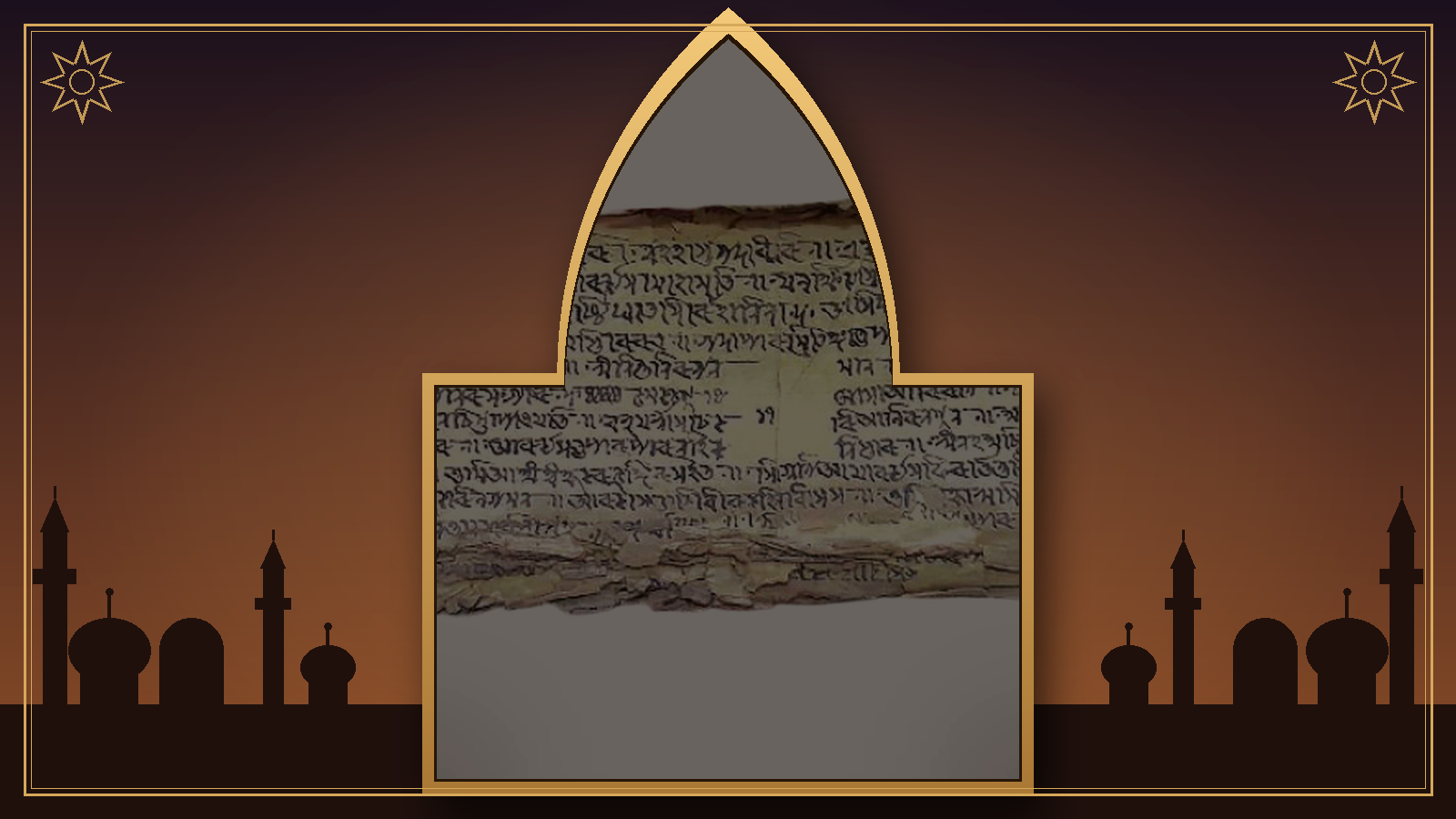
This does not mean Bengali poets did not exist before Muslim rule arrived. They did. But they worked in the shadows, unsupported and unrecognised. Even the Charyapada, arguably the oldest surviving body of Bengali verse, suffered from this indifference. Scholar Dr Wakil Ahmed has pointed out that before Muslim political power took root, Bengali poets never received patronage from any Hindu king, and much of the blame for this lies with the Brahmin scholarly establishment of the time. He credits the relatively liberal Pala rulers with nurturing what could be called a golden age of Bengali culture, the very period that gave birth to the Charyapada. But once the Sen dynasty rose to power in the twelfth century, Brahminical orthodoxy turned hostile. What followed was not just persecution of Bengali Buddhists but an attempt to erase their culture altogether. Many fled to Nepal, and it is thanks to that flight that the Charyapada survived at all.
Enter the Sultans
The real turning point for Bengali came with the establishment of Muslim rule, through what became known as Shah e Bangala. The Sultans of this era achieved something no previous regime had managed. They united scattered Bengali speaking regions and communities into one political and linguistic identity.
Historian Dr Abdur Rahim, in his landmark work on the social and cultural history of Bengal, argued that had Muslim rule never been established in this province, it is doubtful whether the names Bengal or Bengali would have found any lasting place in history at all. Before this period, he notes, Sanskrit remained the sole vehicle of education and culture, while Bengali survived merely as a regional dialect.
Several Sultans stand out for their role in this transformation, including Ghiyasuddin Azam Shah who ruled from 1389 to 1410, Jalaluddin Muhammad Shah who reigned in two separate spells between 1415 and 1433, Shamsuddin Ahmad Shah from 1433 to 1435, Rukunuddin Barbak Shah from 1459 to 1474, Shamsuddin Yusuf Shah from 1474 to 1481, and Alauddin Hussain Shah from 1493 to 1519. Under their patronage, Bengali language and literature gradually became accessible to ordinary people rather than remaining locked away in elite circles. This is why historians often describe the Sultanate and Mughal periods together as the golden age of Bengali language and literature, a view shared by the noted scholar Dr Dinesh Chandra Sen.
Sen observed that regardless of whether these Muslim rulers originally came from Iran, Turan or elsewhere, once settled in Bengal they became thoroughly Bengali themselves, and grew genuinely curious about local Hindu customs and religious practices. That curiosity is exactly what inspired them to commission Bengali translations of the Ramayana, Mahabharata and Bhagavata from Sanskrit. In his words, the Muslim conquest of Bengal turned out to be the very stroke of fortune that lifted the Bengali language to prosperity.
Persian at Court, Bengali on the Street
In the early days of Sultanate rule, Persian functioned as the official court language, with Arabic and Urdu occasionally used for administrative purposes too. This left the Sultans with a genuine dilemma about where Bengali fit in. Arabic carried deep religious weight as the sacred language of Islam. But governing a population and reaching newly converted Muslims, most of whom struggled with Arabic or Persian, required something more accessible. So the Sultans gradually simplified and elevated Bengali as a practical bridge to their subjects.
Sufi mystics played their part too. They preached in the everyday spoken language of the region because that was the only way to truly connect with common people. This grassroots spread of Islamic teaching, paired with expanding education, injected fresh energy into the Bengali language.
Stories of Love and Faith
On royal instruction, poets began composing narrative verse based on themes drawn from the Quran and other religious texts, aiming to convey moral and spiritual lessons through romantic storytelling. Early works from this period included Yusuf Zulekha, Gazi Bijoy, Laili Majnu and Saif ul Mulk. These tales blended religious devotion with the raw emotion of human love, alongside celebratory accounts of Islamic triumphs, and quickly won over readers.
Since Bengal’s population was a mix of Hindus and Muslims, the Sultans also supported translations of Hindu religious epics into Bengali. Freed from their Sanskrit confines, texts like the Bhagavata, the Ramayana and the Mangal Kavyas found new life in the Bengali tongue. A language that had been overlooked for centuries was suddenly bursting with vitality. Reflecting on this royal patronage, Dr Wakil Ahmed once wrote that Bengali was fortunate to find the company of a generous ruling power at the very moment of its emergence, which not only accelerated its growth but gave it the dignity, richness and fresh energy to flourish on its own terms.
The Poet Kings
Several Sultans were poets themselves. Ghiyasuddin Azam Shah composed verses in Arabic and Persian, yet still contributed significantly to the growth of Bengali literature. Under his patronage, Shah Muhammad Sagir wrote his celebrated work Yusuf Zulekha. It is even believed that Krittibas was commissioned by a Sultan to write his Bengali rendition of the Ramayana.
During the reign of Rukunuddin Barbak Shah, poet Jainuddin composed Rasul Bijoy, while Ibrahim Qawam wrote the Persian text Farhang i Ibrahim, also known as Sharafnama. Prominent Hindu scholars of the era included Raimukut Brihaspati Mishra, Maladhar Basu, Krittibas and Kuladhar. Sultan Shamsuddin Yusuf Shah personally assigned Maladhar Basu the task of translating the Bhagavata into Bengali, later honouring him with the title Gunaraj Khan.
The Golden Age of Hussain Shah
The reign of Alauddin Hussain Shah is widely regarded as the true golden age, or renaissance, of Bengali literature. Just as Pali once achieved pan Indian prestige under the patronage of Buddhism, Bengali reached similar heights of glory under Hussain Shah. Poets and writers threw themselves into literary work on a massive scale, backed enthusiastically by the Sultan and his courtiers.
Jasoraj Khan, author of Shri Krishna Bijoy, served in Hussain Shah’s court and referred to the Sultan in his writing as an ornament of the world. Poet Kabindra Parameshwar praised the Sultan in equally glowing terms, comparing him to a divine incarnation. Hussain Shah clearly took a personal interest in Hindu scripture, commissioning numerous officials to translate Sanskrit religious texts into Bengali. Under the patronage of Paragal Khan, Kabindra Parameshwar produced a Bengali translation of the Mahabharata. This era also produced works like Manasa Bijoy, various Vaishnav verses, and Vijaygupta’s Manasamangal. Hussain Shah’s son, Nasrat Shah, carried the tradition forward as a patron of Bengali literature in his own right. Historian Abdul Karim notes that all four rulers of the Hussain Shahi dynasty were patrons of poets without exception.
Mystics, Romantics and a New Vocabulary
Throughout the fifteenth and sixteenth centuries, numerous Muslim poets composed romantic epics in Bengali. In doing so, they enriched the language by importing a wide range of Arabic and Persian vocabulary, giving Bengali fresh vigour. Muslim poets also deserve credit for pioneering mystical literature in Bengali. Inspired by the ghazals of Jalaluddin Rumi and other Persian Sufi poets, they composed devotional verse known as Padavali, styled loosely on the Persian masnavi tradition.
Another notable addition from this period was the legend of Satya Pir. So deep was public devotion to Muslim saints and mystics that even Hindu writers began composing their own versions of the Satya Pir tales. This cross pollination enriched Bengali literature enormously, introducing new themes, new subject matter and new linguistic textures that helped the language expand even further. By the time of the celebrated poet Alaol, the Islamic literary tradition in Bengali had reached its absolute peak.
A Shared Legacy
Bengali literature flourished under Sultanate patronage, and the language itself grew richer alongside it. The coming together of Hindu and Muslim poets and writers, through their original compositions and translations, brought new ideas and new vocabulary into everyday use. This is how the Sultanate period filled Bengali with such remarkable linguistic diversity and depth. Looking back at the history of Sultanate rule in Bengal, one conclusion becomes hard to avoid. These rulers did more than forge political unity among Bengalis. They built a cultural unity rooted in a shared language, one that still binds the region together today.