


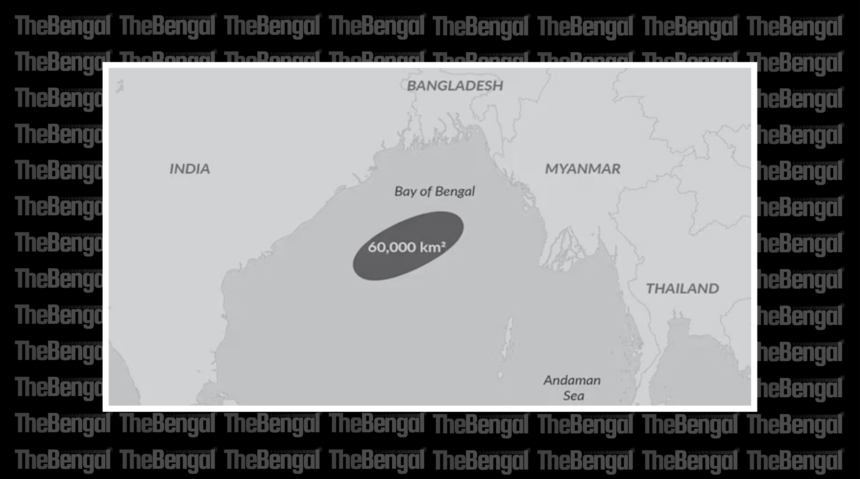
DHAKA: The Bay of Bengal is no longer a quiet stretch of water on the global map. It has become one of the most strategically significant regions in the world. At the center of this transformation stands Bangladesh — a country often underestimated, yet impossible to ignore.
Bangladesh’s importance is not accidental. Geography, history, economics, and demography converge here. The country’s location at the northern tip of the Bay of Bengal makes it a natural gateway between South Asia and Southeast Asia. As global trade routes shift and regional power dynamics evolve, Bangladesh’s role continues to grow in strategic weight.
This is not just a matter of maps and sea lines. It is about influence, access, security, and the future balance of power in the Indo-Pacific.
A Geography That Commands Attention
Bangladesh’s most powerful asset is its geography. The country has a long coastline along the Bay of Bengal, providing direct access to one of the world’s busiest maritime regions. The bay connects the Indian Ocean to East Asia through the Strait of Malacca, a vital chokepoint for global trade and energy flows.
Nearly 90 percent of global trade moves by sea. A significant portion of that trade passes through the Indian Ocean and the Bay of Bengal. Bangladesh’s position allows it to influence regional connectivity, maritime security, and commercial shipping routes.
Unlike landlocked states, Bangladesh has both riverine depth and maritime reach. Its vast delta system links inland South Asia to open seas. This makes Bangladesh not just a coastal country, but a maritime bridge between continents.
The Bay of Bengal: From Periphery to Power Center
For decades, global attention focused on the South China Sea and the Middle East. The Bay of Bengal remained underexplored. That era is ending.
The bay is now emerging as a strategic hub due to three factors: energy routes, economic growth, and security competition. Countries like India, China, Japan, and the United States are paying closer attention. So are ASEAN states and Middle Eastern energy suppliers.
Bangladesh sits at the heart of this renewed focus. Any long-term strategy for the Bay of Bengal must consider Bangladesh’s interests, stability, and cooperation.
Ignoring Bangladesh is no longer an option.
Ports, Connectivity, and Economic Leverage
Bangladesh’s ports are becoming central to regional logistics. Chattogram, Mongla, and the developing Payra port are key maritime assets. These ports serve not only Bangladesh but also neighboring regions, including India’s northeastern states, Nepal, and Bhutan.
As regional connectivity projects expand, Bangladesh becomes a transit hub. Roads, railways, inland waterways, and sea ports converge here. This gives the country leverage in trade negotiations and regional economic planning.
China’s Belt and Road Initiative, India’s Act East Policy, and Japan’s Indo-Pacific vision all intersect in Bangladesh. Each major power sees value in Bangladesh’s infrastructure and location.
This competition is not purely economic. It carries strategic implications. Infrastructure builds influence. Ports shape power.
A Strategic Balance Between Major Powers
One of Bangladesh’s greatest strengths is its ability to maintain strategic balance. The country has pursued a foreign policy based on “friendship to all, malice to none.” This principle has allowed Bangladesh to engage with multiple global and regional powers without becoming overly dependent on any single one.
Bangladesh maintains strong ties with India while expanding economic cooperation with China. It engages with Japan, the European Union, the United States, and Middle Eastern partners. This balanced approach enhances Bangladesh’s strategic value.
For global powers, Bangladesh is not just a partner. It is a stabilizer in a region prone to rivalry.
Maritime Security and Stability
The Bay of Bengal faces non-traditional security threats. These include piracy, illegal fishing, human trafficking, climate-driven displacement, and environmental degradation. Bangladesh’s role in maritime security is therefore critical.
The country has strengthened its naval capabilities and improved maritime surveillance. It has also resolved long-standing maritime boundary disputes through international law, setting an example for peaceful conflict resolution.
A stable Bangladesh contributes to a stable Bay of Bengal. Instability here would ripple across South and Southeast Asia.
Energy, Resources, and the Blue Economy
The Bay of Bengal holds vast untapped resources. These include offshore gas, fisheries, and renewable energy potential. Bangladesh has begun to invest in the blue economy, focusing on sustainable use of marine resources.
Energy security is a growing concern for Asia. Bangladesh’s offshore exploration and LNG infrastructure add to the region’s energy network. As demand rises, the bay’s importance will only increase.
Control and access to these resources are strategic concerns. Bangladesh’s role as a coastal steward places it in a position of influence.
A Population That Shapes the Region
With over 170 million people, Bangladesh is one of the most densely populated countries in the world. This population is young, increasingly urban, and economically active. It represents both opportunity and responsibility.
Bangladesh is a major contributor to global labor markets, peacekeeping missions, and manufacturing supply chains. Its garment industry alone connects it to consumers worldwide.
Demography is power. Bangladesh’s human capital amplifies its strategic relevance.
Climate Change and Strategic Vulnerability
Climate change adds another layer to Bangladesh’s importance. The country is one of the most climate-vulnerable in the world. Rising sea levels, cyclones, and flooding threaten millions of lives.
What happens in Bangladesh will shape global conversations on climate adaptation, resilience, and migration. The Bay of Bengal is a frontline of climate impact. Bangladesh is at that frontline.
Supporting Bangladesh is not charity. It is strategic foresight.
Beyond the Old Narratives
Too often, Bangladesh is discussed only in terms of poverty, disasters, or development challenges. This narrow view misses the bigger picture.
Bangladesh today is a strategic actor. It influences trade routes, security calculations, and regional diplomacy. Its choices matter far beyond its borders.
The Bay of Bengal’s future cannot be imagined without Bangladesh. As global power shifts eastward, Bangladesh’s strategic relevance will continue to rise.
Conclusion: A Country at the Center of Change
Bangladesh is no longer at the margins of global geopolitics. It stands at the center of a transforming maritime region. The Bay of Bengal is becoming a new arena of influence, cooperation, and competition.
In that arena, Bangladesh is not a spectator. It is a key player.
Understanding Bangladesh’s strategic role is essential for anyone seeking to understand the future of South Asia, the Indo-Pacific, and global maritime politics.
Beyond borders and beyond headlines, Bangladesh matters.