

DHAKA: Bengal has always held a special place in the history of anti-colonial movements in South Asia. From the late 18th century to the mid-20th century, Bengal was not only a witness to colonial oppression but also a powerful center of resistance. Its cities, towns, and villages became the stage for political, cultural, and intellectual efforts to challenge foreign rule. The story of Bengal’s contribution to anti-colonial movements is both inspiring and instructive, offering lessons for societies striving for justice and self-determination.
The roots of Bengal’s resistance lie in its unique social and cultural fabric. The region was a hub of trade, education, and intellectual activity under both Mughal and British rule. By the 19th century, Bengal had developed a strong tradition of education and critical thinking, producing thinkers, writers, and reformers who began questioning colonial authority. Institutions like the Hindu College (later Presidency College) in Kolkata became centers for ideas of modernity, nationalism, and reform. Figures such as Raja Ram Mohan Roy, Ishwar Chandra Vidyasagar, and later, Rabindranath Tagore, not only reformed society but also sowed the seeds of political consciousness that would shape anti-colonial movements.
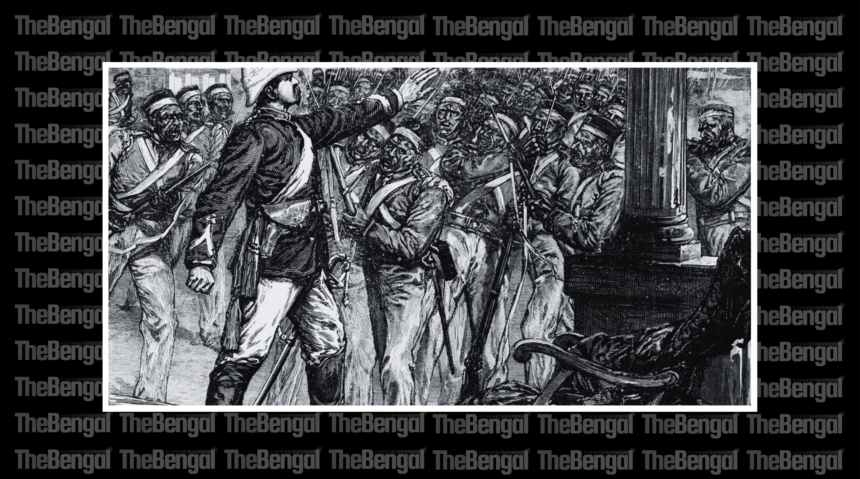
The revolt of 1857, often called India’s First War of Independence, had reverberations in Bengal, though the region was less directly involved than northern India. However, Bengal emerged as a major center for organized resistance in the decades that followed. The late 19th and early 20th centuries witnessed the rise of revolutionary societies, including the Anushilan Samiti and Jugantar, which mobilized young men to fight against colonial oppression. These groups carried out daring acts of defiance, from armed resistance to the assassination of colonial officials, demonstrating the depth of political commitment among Bengal’s youth.
Alongside revolutionary movements, Bengal also became a center for intellectual opposition to British rule. Newspapers, journals, and pamphlets played a crucial role in educating the public and fostering nationalist sentiment. Figures like Surendranath Banerjee and Bipin Chandra Pal used their voices to call for political reform and self-governance. The press in Bengal became a weapon against colonial propaganda, encouraging ordinary people to question the legitimacy of foreign rule and participate in the freedom struggle.
The 20th century marked a new phase in Bengal’s anti-colonial movement. The partition of Bengal in 1905 by Lord Curzon, which divided the province along communal lines, ignited widespread protests. Although the British reversed the decision in 1911 due to mass opposition, the movement left a lasting mark. It introduced modern methods of political mobilization, including mass demonstrations, boycotts, and civil disobedience. Women, students, and workers became active participants, showing that the struggle for freedom extended beyond the elite or educated classes.
Bengal also played a significant role in the larger Indian independence movement led by Mahatma Gandhi. The region contributed immensely to the Non-Cooperation Movement of 1920-22, the Civil Disobedience Movement of the 1930s, and the Quit India Movement of 1942. Leaders like Subhas Chandra Bose, who founded the Indian National Army, emerged from Bengal, inspiring not only local populations but also freedom fighters across India and beyond. Bose’s vision of direct action against colonial forces complemented the broader nonviolent strategies of the Indian National Congress, demonstrating Bengal’s multi-faceted approach to liberation.
While much of Bengal’s anti-colonial struggle was political, cultural resistance also played a vital role. Literature, poetry, music, and theater became mediums to express dissent and inspire nationalism. Rabindranath Tagore’s writings, for example, celebrated human dignity and critiqued oppression, offering a moral and cultural foundation for political action. Similarly, folk traditions and regional art forms helped to mobilize rural populations and keep the spirit of resistance alive across generations.
It is also important to recognize the social and economic dimensions of Bengal’s anti-colonial movements. British policies had transformed Bengal’s economy, causing famines, rural indebtedness, and urban poverty. Movements such as the Indigo Revolt (1859–1860) and the peasant uprisings in various districts reflected not only political grievances but also the struggle for economic justice. The participation of ordinary farmers, laborers, and artisans underscored that anti-colonial resistance was deeply rooted in the lives of the people, not confined to cities or elite circles.
Bengal’s role in anti-colonial movements was not without sacrifices. Thousands of lives were lost, families were displaced, and countless individuals suffered imprisonment and exile. Yet, the resilience shown by Bengal’s people created a legacy that influenced other regions. The strategies, ideas, and courage of Bengal’s revolutionaries resonated across South Asia, inspiring similar struggles in places like Assam, Bihar, and Odisha. Bengal became both a laboratory of resistance and a beacon of hope for oppressed peoples seeking freedom.
Today, as we reflect on Bengal’s contribution to anti-colonial movements, several lessons emerge. First, education and intellectual engagement are powerful tools for social change. Bengal’s reformers and thinkers demonstrated that challenging oppression requires both moral clarity and practical action. Second, mass participation strengthens movements. Bengal’s history shows that real change is achieved when students, workers, women, and peasants unite with a shared purpose. Third, culture and art are inseparable from politics. Literature, music, and theater not only document resistance but also inspire generations to uphold justice and dignity.
Bengal’s anti-colonial struggle is a reminder that freedom is not simply the absence of foreign rule but the presence of justice, equality, and human dignity. The courage of its leaders and the sacrifices of its people shaped the path to India’s independence and continue to influence movements for social justice worldwide. As we navigate contemporary challenges, from political polarization to economic inequality, Bengal’s history urges us to remain vigilant, engaged, and committed to the ideals of freedom and human rights.
In conclusion, Bengal was not just a passive victim of colonial rule; it was a dynamic force that challenged oppression in multiple spheres— political, economic, cultural, and social. Its people, through courage, intellect, and creativity, helped lay the foundation for South Asia’s freedom movements. Understanding Bengal’s pivotal role enriches our appreciation of history and inspires ongoing struggles for justice and liberty in the present day. The story of Bengal reminds us that the pursuit of freedom is never easy, but it is always worth the effort.