



DHAKA: Bangladesh today stands at a complex geopolitical crossroads. Situated between South and Southeast Asia, with direct access to the Bay of Bengal, the country holds strategic value far beyond its size. Over the past decade, global powers have increasingly focused their attention on Dhaka. China, India, and the United States now see Bangladesh as a key player in regional stability, economic connectivity, and maritime security.
This growing interest brings both opportunity and risk. Bangladesh must engage with all three powers while protecting its sovereignty, political independence, and development priorities. The challenge is not choosing sides, but managing relationships in a rapidly polarizing world.
Why Bangladesh Matters Geopolitically
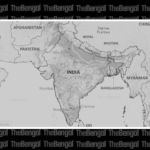
Bangladesh’s importance lies in geography, demographics, and economic momentum. The country connects India’s northeastern states to the rest of South Asia. It sits near vital sea lanes in the Bay of Bengal, a region critical for global trade and energy transport. With a population of over 170 million and steady economic growth, Bangladesh also represents a major emerging market.
For global powers, Bangladesh is no longer a peripheral actor. It is a bridge between regions, a manufacturing hub, and a political voice in the Global South. This has elevated its role in wider Indo-Pacific strategies.
China: Infrastructure, Investment, and Strategic Depth
China’s engagement with Bangladesh has expanded rapidly since the mid-2010s. Under the Belt and Road Initiative (BRI), Beijing has invested heavily in infrastructure projects such as bridges, power plants, highways, and ports. These projects aim to address Bangladesh’s development gaps while strengthening China’s economic footprint.
For Bangladesh, Chinese investment offers speed, scale, and financing options that are often difficult to secure elsewhere. Mega projects like the Padma Bridge rail link and power generation facilities reflect this cooperation.
However, concerns also exist. Critics warn about debt sustainability, transparency, and long-term strategic implications. While Bangladesh has so far avoided the debt traps seen in some other countries, Dhaka remains cautious. The government consistently emphasizes that Chinese projects are economic, not military.
China also sees Bangladesh as a stable partner in South Asia, especially as Beijing’s relations with India remain tense. Yet Bangladesh has carefully avoided being drawn into this rivalry.
India: History, Geography, and Strategic Sensitivity
India’s relationship with Bangladesh is deep, emotional, and often complicated. Shared history, cultural ties, and the legacy of the 1971 Liberation War form the foundation of bilateral relations. India views Bangladesh as a crucial neighbor for its security, connectivity, and regional leadership.
Over the years, cooperation has improved in areas such as border management, counter-terrorism, energy trade, and transit access. India now uses Bangladeshi ports and roads to connect its northeastern states, reducing logistical isolation.
At the same time, unresolved issues continue to affect public perception. Water sharing of transboundary rivers, trade imbalances, and border incidents remain sensitive topics. Bangladesh also watches India’s domestic politics closely, especially policies that may impact regional harmony.
India is particularly attentive to China’s growing presence in Bangladesh. New Delhi worries that excessive Chinese influence could alter the strategic balance in the Bay of Bengal. This has led India to increase diplomatic engagement, offer development assistance, and push for deeper regional integration.
The United States: Democracy, Security, and the Indo-Pacific Vision
The United States approaches Bangladesh from a different angle. Washington views Dhaka as a key partner in its broader Indo-Pacific strategy. Issues such as maritime security, freedom of navigation, labor rights, and democratic governance shape US engagement.
The US remains one of Bangladesh’s largest export destinations, especially for garments. American companies also see Bangladesh as a potential alternative manufacturing hub amid global supply chain shifts.
However, relations have faced tensions in recent years. Concerns over elections, human rights, and governance have led to diplomatic friction. US visa policies linked to democratic processes have been closely watched in Dhaka.
Despite differences, both sides recognize mutual interests. Bangladesh benefits from US market access, security cooperation, and technological support. The US, in turn, values Bangladesh’s role in regional stability, peacekeeping, and counter-extremism.
The Bay of Bengal: A Strategic Maritime Space
The Bay of Bengal has emerged as a critical arena in regional geopolitics. It hosts key shipping routes, fishing grounds, and potential energy resources. Control and influence in this maritime space matter greatly to China, India, and the US.
Bangladesh has worked to strengthen its naval capacity and maritime governance following successful resolution of sea boundary disputes with India and Myanmar. These victories boosted Bangladesh’s confidence and international standing.
Rather than militarizing the Bay, Bangladesh promotes it as a zone of cooperation. Blue economy initiatives, disaster management, and environmental protection are central to Dhaka’s maritime vision.
Balancing Without Aligning: Bangladesh’s Core Strategy
Bangladesh’s foreign policy rests on a simple principle: “Friendship to all, malice toward none.” This doctrine, rooted in the vision of Bangabandhu Sheikh Mujibur Rahman, remains relevant today.
Dhaka avoids military alliances and resists pressure to join exclusive blocs. It engages China for development, India for regional stability, and the US for global access. Each relationship is managed separately, based on national interest.
This balancing act requires diplomatic skill. A misstep could invite pressure or retaliation. Yet Bangladesh has so far maintained credibility as a pragmatic and independent actor.
Domestic Factors Shaping Foreign Policy
Internal stability, economic goals, and public opinion also shape Bangladesh’s external relations. Development remains the top priority. Any partnership that supports growth, jobs, and infrastructure gains public support.
Political legitimacy matters as well. International scrutiny over governance affects diplomatic space. Bangladesh understands that strong institutions at home enhance bargaining power abroad.
The country’s growing middle class and young population are increasingly aware of global trends. This creates demand for diversified partnerships, technology transfer, and education opportunities.
Challenges Ahead in a Polarized World
Global geopolitics is becoming more polarized. Competition between major powers is intensifying. Neutral space is shrinking. For countries like Bangladesh, this creates constant pressure to take sides.
Sanctions, trade restrictions, and security rivalries could complicate decision-making. Climate change, migration, and economic shocks add further strain.
Yet Bangladesh also has leverage. Its economic resilience, strategic location, and diplomatic credibility give it room to maneuver.
A Quiet but Confident Middle Power
Bangladesh is no longer just a recipient of global attention. It is an active shaper of its own destiny. By engaging China, India, and the United States without surrendering autonomy, Bangladesh demonstrates a model of strategic balance for the Global South.
The road ahead will not be easy. Mistakes will be costly. But with careful diplomacy, strong institutions, and clear national priorities, Bangladesh can continue to navigate the great-power triangle with confidence.
In a world divided by rivalry, Bangladesh’s strength lies in balance.